Saturday, September 20, 2014

Young Adventures Group Students Discover Birds!

Friday, September 19th, the Discover Birds Program and the Young Adventures Group (YAG) homeschool students and teachers met at the University of Tennessee Arboretum in Oak Ridge, Tennessee, to learn about birds!
Doug Schneeberger began the program with his trunk of bird treasures including beaks, feet (castings), bird skeletons, talons, feathers and other items that demonstrate the unique and varied characteristics of birds.
Above, the skull and beak of a Wood Stork. A Wood Stork's bill is very sensitive allowing it to forage in muddy water and capture small fish and invertebrates that swim through its open bill. When a Wood Stork touches prey with its bill, it can snap its bill shut in 0.025 seconds!  This is one of the fastest reaction times known in vertebrates!
Here's what a Wood Stork looks like.  Biologists believe that his bald head may make it easier to clean the mud from his head.

Below, Doug shows students a comorant beak.  You can visit the cormorant at Cornell: Double-crested Commorant.  Commorants can be found in Tennessee, while Wood Storks are most often found in coastal wetlands in Florida and South Carolina.
Below, Doug discusses the skeleton of a bird and talks about features in common with humans and what is different.

Birds create a variety of nests!  Below, Doug shows students some of these nests.  No two nests are built exactly alike, and birds build a variety of nest shapes with a variety of materials. Some birds create tightly woven nests.  Others, such as the killdeer, make no nest at all and simply lay their eggs on gravel.  (You can find a killdeer on the Common Tennessee Birds page.)
As Doug was talking, I noticed that one of our students (shown below) was carrying a notebook and a pencil and making sketches of the bird-related items that were discussed. This is what explorers and field biologists have done for centuries--recorded and sketched their observations in a notebook!

By the end of the demonstration, Jean-Philippe, age six, had captured a visual record of a robin's nest, a talon and a Wood Stork's skull!  An excellent way to record what you find in nature!
Photo credit:  Jean-Philippe's Mom

Above, two students pass a bird's nest for a closer look.  After Doug's presentation we went on a bird walk along the arboretum trails.
It was a very hot afternoon (81 F degrees!) and the birds were mostly quiet but we found some very interesting habitat, including Jewel Weed (above), cardinal flowers and other hummingbird-attracting plants along the creek's edge.
The birds species found were American Robin, Tufted Titmouse, Eastern Phoebe (heard his song), Carolina Chickadee, Carolina Wren and a flock of calling American Crows flying over the trees tops.  

Each of the students in the program received a Discover Birds Activity Book, compliments of the Knoxville Chapter of the Tennessee Ornithological Society (KTOS).

A special thank you to Kate Owens, of Young Adventures Group, and Billie Cantwell, from KTOS, for arranging this program.  A big thank you, also, to Discover Birds volunteers Doug Schneeberger, Michael Plaster and Vickie Henderson!

KTOS--Knoxville Chapter of the Tennessee Ornithological Society
KTOS on Facebook
Discover Birds Program
Discover Birds Activity Book
Discover Birds Curriculum Guide
Discover Birds in the Tennessee Conservationist
eBird at the Cornell Lab of Ornithology
Tennessee Birds
Tennessee Watchable Wildlife--Birds
Cornell's free beginning birding app--Merlin Bird ID by Cornell Lab of Ornithology
Audubon Mobile Field Guides

Monday, September 1, 2014

Discover Birds Featured at the Tennessee National Wildlife Refuge

Discover Birds Activity Books are available in the brand new visitor's center at the Tennessee National Wildlife Refuge in northwest Tennessee!
Photo credit:  Cyndi Routledge

Cynthia Routledge, who coordinates the distribution of the Discover Birds Activity Books for the Tennessee Ornithological Society (TOS), is affiliated with the Friends Group at the refuge and acquainted with Ranger Joan Stevens.  "I knew that Joan hosted many field trips through the year with many local schools kids in Henry, Benton and Humphrey Counties.  ...I saw this as a wonderful outreach opportunity and donated 205 books to the Friends Group for use in the bookstore."
Above and below, teachers try out binoculars and learn the best way to locate a bird or other wildlife.  Joan, the refuge's Educational Specialist, conducted teacher workshops on July 21st and 22nd at the refuge's new visitor's center near Britton Ford and Paris, TN.  
The workshops were held to introduce area teachers to the new facility, the programs offered at the refuge and the educational opportunities for student field trips during the school year.  Each teacher received a Discover Birds Activity book and a copy of the new curriculum guide, compliments of the Nashville Chapter of the TOS.  
Ranger Joan Stevens describes a bird field guide and how it is used in the field.

The teachers in the workshop try out a "bird beaks" activity that demonstrates how varied beak shapes help birds eat their preferred foods.

Thank you to Joan Stevens for providing the teacher workshop images!

TOS member Cyndi Routledge, of Clarksville, coordinates the free distribution of the Discover Birds Activity Books. The only requirement is that the books be used as part of an educational program that includes a bird walk experience introducing children to the birds around them.  Educational programs are also asked to provide a brief description of their activities and photographs that can be shared with others on the Discover Birds Blog.

To make a request for activity books for your classroom or program, contact Cyndi Routledge at routledges@bellsouth.net.

To download and print a copy of the activity book, visit:  The Tennessee Ornithological Society--Educational Resources page.

Discover Birds Activity Book
Discover Birds Curriculum Guide
Discover Birds Program
Nashville Chapter, TOS
Tennessee Ornithological Society
Tennessee National Wildlife Refuge

Sunday, August 3, 2014

We've Got Books!

Twelve thousand books!  Thanks to a generous grant awarded to the Discover Birds Program by the Tennessee Crane Fund earlier this year, we have just received delivery of 12,000 Discover Birds Activity Books to be distributed throughout the state of Tennessee.  
The Tennessee Ornithological Society (TOS) will celebrate its 100th anniversary in 2015 and it is our goal to distribute these books to as many Tennessee educational programs as possible in order to promote excitement and learning about birds.  The books are targeted for Tennessee, but we have also enjoyed sharing books with other states and Cuba!  
TOS member Cyndi Routledge, of Clarksville, coordinates the distribution of books. The only requirement is that the books be used as part of an educational program that includes a bird walk experience introducing children to the birds around them.  Educational programs are also asked to provide a brief description of their activities and photographs that can be shared with others on the Discover Birds Blog.

To make a request for activity books for your classroom or program, contact Cyndi Routledge at routledges@bellsouth.net.

To download and print a copy of the activity book, visit:  The Tennessee Ornithological Society--Educational Resources page.

Discover Birds Activity Book
Discover Birds Curriculum Guide
Discover Birds Program
Tennessee Ornithological Society

Monday, July 7, 2014

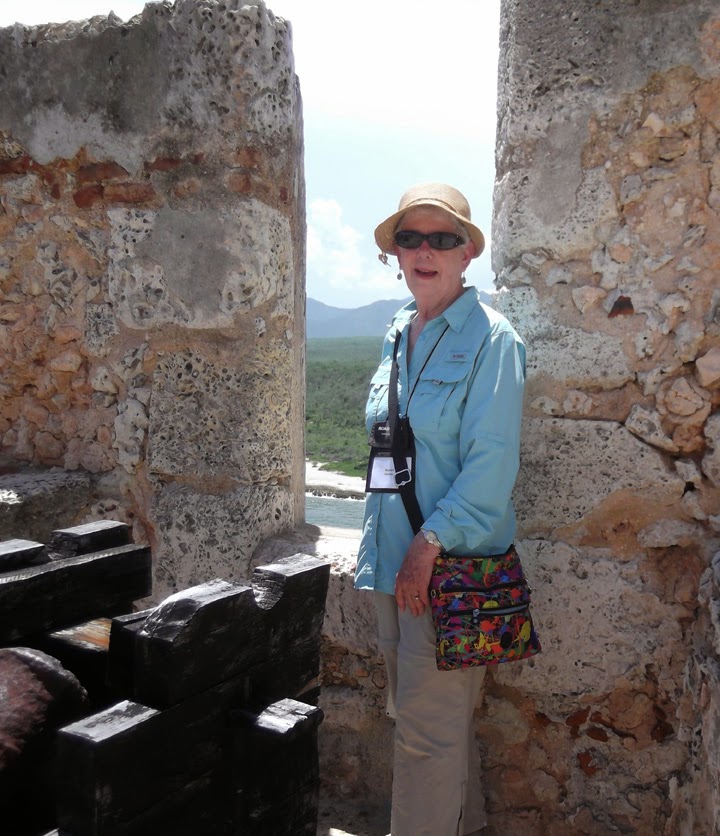
Susan Hollyday Takes Discover Birds Activity Books to Cuba!

Susan Hollyday, a member of the Nashville chapter of TOS, traveled to Cuba recently with the Road Scholar Program (formerly Elderhostel) on a People to People two week tour to learn about many aspects of the Cuban culture.
Susan writes:  "It was suggested that we might like to bring gifts for some of the folks along the way. From the itinerary, I noticed we would be visiting an elementary school where the children were studying English. I then decided to carry a dozen Discover Birds Activity Books and several Teachers Curriculum Guides with me.  My 37 year old Cuban guide was delighted.  This was a first and he was very pleased to have me share the booklets with the school."
Susan visited the San Eugene of Mazenod Elementary School.   "I presented their teacher, Ms. Rodriguez, with several Discover Birds Activity Books. I also gave her several copies of the Teacher’s Guide. Ms. Rodriguez...was especially happy to have new material to present to her students. Supplies are scarce in Cuba.  The activity books are the perfect grade level, with a format similar to the workbooks they are using. Many of the birds in Cuba are the same as the birds in Tennessee which appear in the Discover Birds Activity Book. Perhaps we share some migrants!  This should make the booklets even more meaningful, if the children see the birds in the books in their own neighborhoods. Of course, they will be more aware of birds and possibly other things in nature."
Susan reports that she recently sent more booklets, pencils, and sharpeners to the elementary school and included several copies of the Teachers Curriculum Guide.

"I hope the mail works!  In my dreams I see a young English speaking Cuban leading a group of American birders on an eco-tour of this beautiful country. Who knows what seeds may be planted?"

Visit the Tennessee Ornithological Society's education page to learn more about the Discover Birds Program.  You will also find an online pdf of the Discover Birds Activity Book that can be downloaded and printed and a copy of the Teacher's Curriculum Guide.

For information about obtaining printed books, contact Cyndi Routledge at routledges@bellsouth.net.  For more information about the Discover Birds Program contact Billie Cantwell at bfcantwell@gmail.com or Cyndi Routledge at routledges@bellsouth.net.

Links and Resources:
Discover Birds Activity Book
Discover Birds Curriculum Guide
Discover Birds Program
Nashville Chapter of TOS
Tennessee Ornithological Society

Saturday, July 5, 2014

The Discover Birds Program Visits Black Bayou Lake National Wildlife Refuge!

Nova Clark is an education specialist and ranger at Black Bayou Lake National Wildlife Refuge in Monroe, Louisiana. 
During a google search for Whooping Cranes, she ran across my blog, Vickie Henderson Art, and found the Discover Birds Activity Book and information about contacting Cyndi Routledge, in Clarksville, Tennessee, the Discover Birds Activity Book volunteer coordinator.  Cyndi arranged for the Black Bayou Lake summer camp to receive 30 books that were donated by the Nashville Chapter of the Tennessee Ornithological Society.
This Black Bayou camp session shown here was a week-long session for 3rd to 5th grade students who participated in nature walks, fishing, boating and a range of out-door activities that helped them learn more about nature.
Students completed activities in the Discover Birds book and took walks to find birds and learn about their habitat.  
A bird beak learning experience is shown above.

In her recent email Nova describes the student experiences:  
"The camp is a nature camp that runs for 3.5 hours each day for a week and we cover all kinds of nature topics, just to get kids more familiar with the outdoors. This week it is for kids who have completed the 3-5th grades in school.  We have been using the books as well as going outside and taking nature walks which also includes looking for birds and learning about habitat.  So we have looked for nests, talked about adaptations, played the migration game [Migration Mad Lib on pg 19 of the book], and had a bird-beak challenge. " 
Above, students use utensils to represent different bird beaks and try to pick up food items to demonstrate how different beaks work best with different foods.

Photo credit:  Cyndi Routledge                                             Prothonotary Warbler

Nova continues:  "We also have a challenge trail which includes two bird stations, one of of which is standing on one leg like a heron the other flapping like a hummingbird.  We will be fishing tomorrow and talk about our fishing birds. Still hoping to actually see a Prothonatory Warbler on the trail, always a challenge since we hear them but they are good at hiding from us!"
Above, camp students work exercises in their activity books after spending time finding birds in nature.

The Discover Birds Activity Book is published by the Tennessee Ornithological Society and distributed free to teacher classrooms and non-profit organizations that provide out-door activities to help students learn about birds and their environment.   The book is designed to continue the learning and excitement that students experience when they discover birds in their natural world.

A special thank you to Nova Clark for her inquiry about the book and for providing the above images and description of the camp program at Black Bayou Lake National Wildlife Refuge!  Thanks also to Cyndi Routledge and the Nashville Chapter of TOS for their generous donation of books!

Our goal:  To give students an exciting experience that will spark their interest in birds for a life-time!

Discover Birds Program
Discover Birds Activity Book
Discover Birds Curriculum Guide
Nashville Chapter of TOS

Wednesday, June 11, 2014

Clayton-Bradley Academy Discovers Birds!

On May 23rd, the Discover Birds Program had a great morning of discovering birds with students on the campus of the Clayton Bradley Academy in Blount County, Tennessee.
Above, Billie Cantwell gets students ready to learn about birds by playing the bird's song while showing students the bird on her I-pad.  A slideshow presentation followed showing students a variety of birds, their habitat and the ways in which the bird's characteristics make it well suited for that habitat.  
Students groups rotated through a three-part program--a bird slide presentation, a show-and-tell session with bird related items that students could handle and examine, and a guided bird walk. Students were given a Waterford Press Pocket Naturalist Guide on Tennessee Birds to help in identifying birds and binoculars were provided.  Birding spotting scopes were also provided to help "bring the birds closer".
Above, Warren Bielenberg talks with students about listening for bird songs and calls.  Often we know that a bird is in the area because we here their song or call notes.
Above, Chris Welsh helps a student use the spotting scope while another student finds a Mourning Dove with his binoculars.
Above, Warren talks with students about how to find birds.  His walk took his students along a path near a creek, below.  Eastern Bluebirds, American Robins and a Green Heron were among the birds found.
Warren explained that some birds have more than one name.  The Robin's full name, for example, is American Robin.  He compared these longer names to human first and last names.  We hear the Robin's full name less often than the simple name, Robin.
The Green Heron was found sitting on an electrical wire which seemed like an unlikely place to find a wading bird.  The two green herons in the area seemed to like these wires for perching.  Warren gets the scope on the heron just before it flies.  
Above, you see the Green Heron in flight and below, a closer view of a Green Heron in its wetland habitat. Green Herons are wading birds that feed on fish and other small wetland animals.
Photo credit:  Wiki Commons

While Warren's group was on their bird walk, another group of students was visiting with Paula Schneeberger to see and learn about her collection of bird-related objects.  Bird talons, eggs and a collection of owl pellets are among the items the students examined.   
Above, Paula explains that baby birds while hatching have a "pipping" tooth on the end of their beak, a hard protrusion that helps the unhatched chick break open the shell.  The pipping tooth disappears a few days after the chick is hatched.
Above, the last bird walk group assembles outside for their birding experience.  As Warren explains some tips on finding birds, Chris Welsh gets his telescope on an Eastern Kingbird perched high in a tree at the edge of the campus.
It looked as though the kingbird and his mate were guarding their partially built nest, located to the right and below the kingbird shown above.  Below, is a closer view of an Eastern Kingbird.  Kingbirds are fly-catchers.  They catch insects by flying out from a perch in spectacular maneuvers to snap up insects in flight.
Males and female kingbirds look alike.  Below, a Common Grackle perches on a limb briefly before flying on.  Notice his yellow eye and overall size.  Grackles are smaller than crows, which are also black.
At the concrete supports that brace the nearby highway, we found nest-building Cliff Swallows. Cliff Swallows build their nests of mud and are colony nesters, meaning many pairs nest together in the same location.  The swallows flew into the nest area together and left the nest area at the same time, filling the sky with chattering, insect eating birds!
Below, two images that show the beautiful colors of the Cliff Swallow and a closer look at an unfinished mud nest.  When finished, the nest entrance will be closed into a small round opening, protecting the eggs and hatched young inside.
Photo credit:  Wiki Commons

The swallow below has just applied wet mud to the nest.
Photo credit:  Wiki Commons

Below, a Red-tailed Hawk flies over-head giving us a look at his powerful wings and red tail.
Red-tailed hawks are one of our most common hawks in Tennessee.  They feed on mice, voles and other small rodents that they find by hunting from a high perch.

Our thanks to Clayton-Bradley School and the teachers who invited us to bring the program to their students. Thanks also to Discover Birds Program volunteers Doug Schneeberger, Paula Schneeberger, Warren Bielenberg, Chris Welsh, Vickie Henderson and Billie Cantwell.

For the morning we found 41 species of birds.  Chris Welsh uploaded the following list to eBird at the Cornell Lab of Ornithology:

3 Mallard
1 Double-crested Cormorant
     flyover
1 Great Blue Heron
     flyover
2 Green Heron
1 Black Vulture
3 Turkey Vulture
2 Red-tailed Hawk
2 Rock Pigeon (Feral Pigeon)
3 Mourning Dove
1Chimney Swift
1 Red-bellied Woodpecker
1 Northern Flicker
1 Eastern Phoebe
     Nest under overpass, fresh but did not see birds at nest.
1 Great Crested Flycatcher
2 Eastern Kingbird
     Seen near what appeared to be unfinished nest.
     Breeding Code--Visiting Probable Nest site
1 White-eyed Vireo
3 Blue Jay
4 American Crow
2 Barn Swallow
     Nest under overpass
     ON Confirmed--Occupied Nest
50 Cliff Swallow
     Active nests under overpass
     ON Confirmed--Occupied Nest
1 Carolina Chickadee
     heard only
1 Tufted Titmouse
     heard only
2 Carolina Wren
4 Eastern Bluebird
     (2 adult males; 1 recently fledged juvenile (sex unknown); 1 adult female)
     Confirmed recently fledged young
4 American Robin
2 Northern Mockingbird
6 European Starling
18 Cedar Waxwing
1 Prothonotary Warbler
     heard only along creek east of overpass
1 Common Yellowthroat
   heard only
1 Yellow-breasted Chat
1 Eastern Towhee
3 Field Sparrow
2 Song Sparrow
4 Northern Cardinal
1 Indigo Bunting
1 Eastern Meadowlark
     heard only
5 Common Grackle
8 Brown-headed Cowbird
12 House Finch
2 American Goldfinch

Links and Resources:

Clayton-Bradley Academy
Waterford Press Pocket Guides--Tennessee Birds
KTOS--Knoxville Chapter of the Tennessee Ornithological Society
KTOS on Facebook
Discover Birds Program
Discover Birds Activity Book
Discover Birds Curriculum Guide
Discover Birds in the Tennessee Conservationist
eBird at the Cornell Lab of Ornithology
Tennessee Birds
Tennessee Watchable Wildlife--Birds
Cornell's free beginning birding app--Merlin Bird ID by Cornell Lab of Ornithology
Audubon Mobile Field Guides

Related Posts Plugin for WordPress, Blogger...